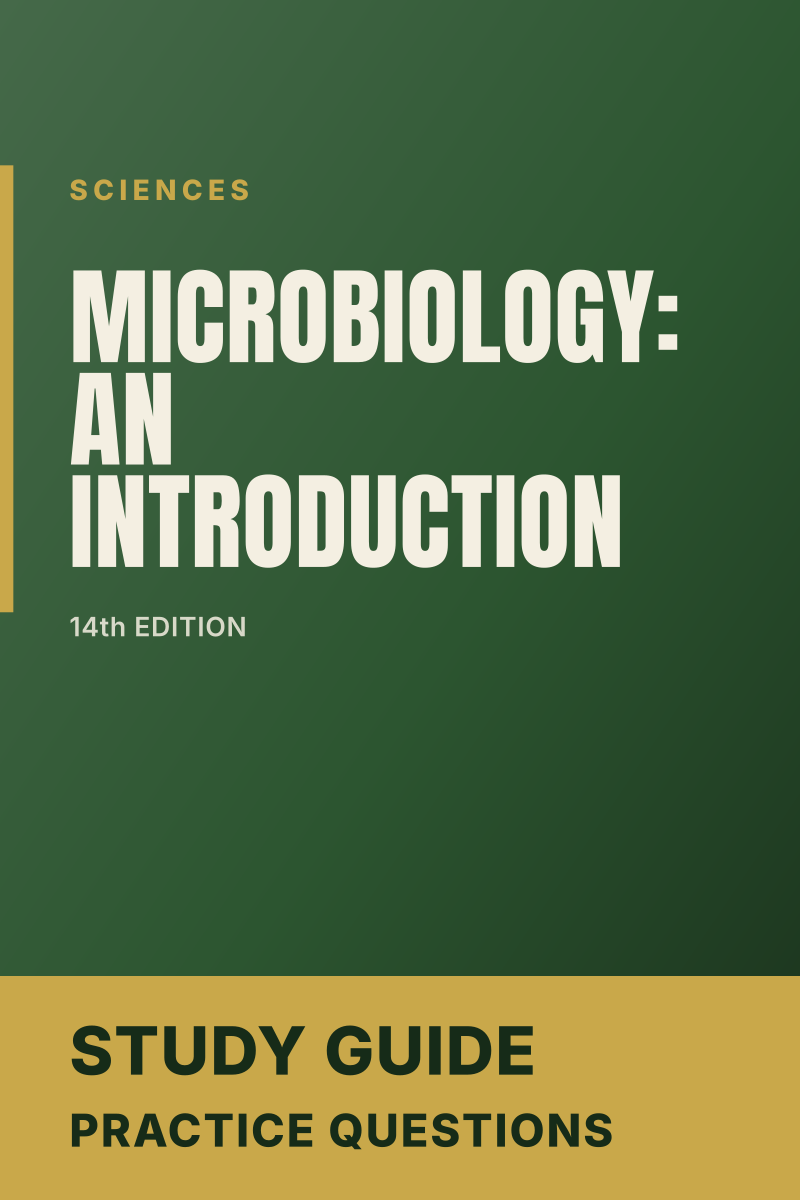
Microbiology: An Introduction
Gerard J. Tortora, Berdell R. Funke, Christine L. Case · 14th Edition
Complete chapter-by-chapter study guide aligned with Microbiology: An Introduction (14th Edition). Includes summaries, learning objectives, and exam-style practice questions for all 22 chapters.
Overview
Tortora, Funke, and Case's Microbiology: An Introduction is the best-selling allied-health microbiology text, emphasizing disease and clinical application with a body-systems approach to infectious disease. The 14th edition integrates Mastering Microbiology.
The single most widely adopted microbiology text for nursing and allied-health programs; its disease-by-body-system chapters mirror the infection-control content on nursing licensure prep.
What you'll learn
The major topics this guide walks you through, matched to the textbook's order:
- The Microbial World and You
- Chemical Principles
- Observing Microorganisms Through a Microscope
- Functional Anatomy of Prokaryotic and Eukaryotic Cells
- Microbial Metabolism
- Microbial Growth
- The Control of Microbial Growth
- Microbial Genetics
- Biotechnology and DNA Technology
- Classification of Microorganisms
- The Prokaryotes: Domains Bacteria and Archaea
- The Eukaryotes: Fungi, Algae, Protozoa, and Helminths
- Viruses, Viroids, and Prions
- Principles of Disease and Epidemiology
Chapters covered
Every chapter below is fully covered in the PDF — summary, learning objectives, key terms, and exam-style practice questions with rationales.
Questions about this study guide
What exactly do I get?
A printable PDF study guide covering all 22 chapters of Microbiology: An Introduction (14th Edition) — chapter summaries, learning objectives, and exam-style practice questions with rationales. One file, lifetime access, no subscription.
How soon will I get it?
Instantly. A download link appears on screen and lands in your inbox the moment your payment clears.
Is this an official Pearson product?
No. This is an independent study guide aligned with the topics, chapters, and learning objectives of Microbiology: An Introduction, 14th Edition. It is not affiliated with, endorsed by, or published by Pearson, and the original text remains the authoritative reference.
What is included in the study guide?
Chapter-by-chapter summaries, key terms, and learning objectives spanning all 22 chapters, plus exam-style practice questions with answers. It is delivered as an instant PDF download.
Does it help me prepare for the exam?
The single most widely adopted microbiology text for nursing and allied-health programs; its disease-by-body-system chapters mirror the infection-control content on nursing licensure prep. Use it alongside your textbook and course notes to review the highest-yield material and self-test before exams.
Will it match my edition?
This guide is built around the 14th Edition. If your class uses a different edition, chapter numbering may shift slightly, but the topics and learning objectives are usually unchanged.
Do I still need the textbook?
The study guide is a companion, not a replacement — it helps you study efficiently and review fast, but you'll still want the textbook for full depth and any assigned readings.
What if it is not what I expected?
Every purchase is backed by a 14-day money-back guarantee — email us within 14 days for a full refund.
Is this a test bank or copied from the textbook?
No. This is an original study guide written to align with Microbiology: An Introduction — summaries, objectives, and practice questions with rationales, not a reproduced publisher test bank or copied text.
More sciences study guides
About this study guide
This is an original study guide written to align with the topics and learning objectives covered in Microbiology: An Introduction (14th Edition) by Gerard J. Tortora, Berdell R. Funke, Christine L. Case. It is not affiliated with, endorsed by, or licensed by the publisher or the textbook's authors. All summaries, practice questions, and explanations are independently authored.